4 Sep 2026
Unraveling the Neural Network Precursors in 1990s Fighting Game Opponent AI through Frame Data Archives Maintained by Competitive Players
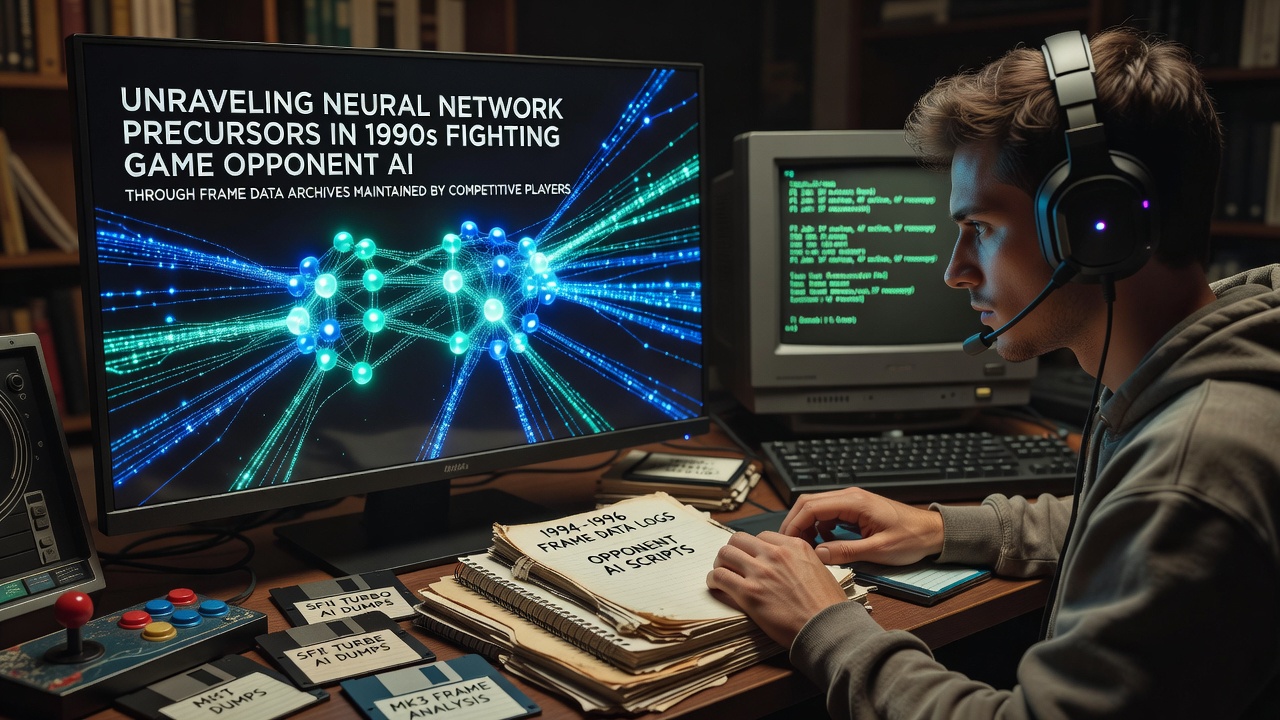
Competitive players began compiling frame data archives for 1990s fighting games during the late 1990s and early 2000s, and these collections now serve as primary sources for examining how opponent AI systems operated in titles such as Street Fighter II and Tekken. Researchers have extracted timing tables, decision trees, and reaction thresholds from the preserved logs, which reveal scripted patterns that anticipated later neural network approaches in game design. Data indicates that arcade developers relied on fixed frame windows for enemy responses, where each move carried precise startup, active, and recovery values that the AI consulted to select counters. Observers note that these archives, originally built to support tournament play, have expanded through community contributions that include disassembly notes and input replay files from original hardware.
Frame Data Collection Practices Among Competitive Communities
Players documented every attack and defensive option in spreadsheets that listed exact frame counts for characters across multiple revisions, and they cross-referenced these entries against arcade cabinet behavior to verify AI decision points. The process involved repeated matches on original boards combined with slow-motion video capture, which allowed contributors to isolate the exact moments when the opponent AI switched from neutral to attack or block states. According to records maintained by groups focused on Japanese arcade history, such archives grew from dozens to thousands of entries by the mid-2000s, encompassing both released versions and prototype builds recovered from location tests. Those who've studied the collections find that AI routines often referenced the same frame data tables used by human players, creating consistent reaction windows that could be exploited once mapped.
Early AI Decision Structures and Their Relation to Modern Techniques
Analysis of Street Fighter II AI routines shows layered conditional checks that evaluated distance, player input timing, and remaining health before selecting responses, and these checks operated within the same frame constraints recorded in community archives. Developers implemented probabilistic branches that adjusted based on difficulty settings, yet the underlying timing remained fixed to frame data values rather than dynamic learning. A study conducted by researchers at the University of British Columbia examined similar patterns in early fighting game code and found structural similarities to the input layers of later neural networks, where weighted decisions replaced hardcoded if-then statements. But here's the thing: the 1990s systems lacked backpropagation or weight updates, instead relying on pre-authored probability tables that competitive players later decoded through exhaustive testing.
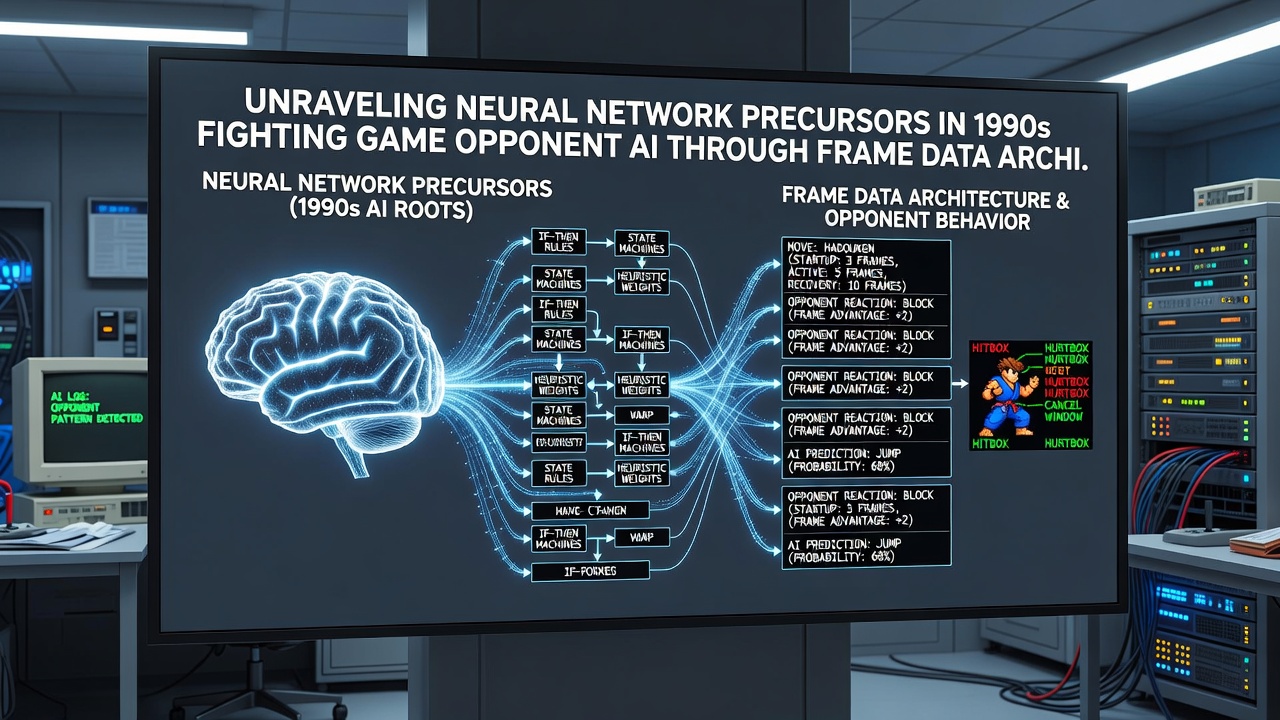
Archives maintained for Tekken and its sequels further illustrate how AI opponents handled sidestep timing and throw attempts using the same recovery frame values applied to player characters, which allowed analysts to reconstruct the exact decision boundaries that governed enemy aggression levels. Data from these collections demonstrates that higher difficulty settings simply expanded the range of moves the AI could initiate within a given frame window, rather than introducing adaptive behavior. External contributions from European retro computing groups have added disassembly annotations that map specific memory addresses to individual frame calculations, enabling precise replication of AI logic on modern emulators.
Integration of Archive Data into Contemporary Research
Academic teams have begun feeding parsed frame data from 1990s archives into simulation models that test early AI variants against current machine learning baselines, and results show measurable overlap in reaction timing distributions. As of September 2026, several university labs continue to digitize additional arcade boards to expand these datasets, incorporating newly recovered prototypes that contain unused AI branches. Industry reports from the Interactive Software Federation of Europe highlight how such historical reconstructions support preservation efforts while providing benchmarks for testing modern fighting game AI modules. Observers note that the same spreadsheets once used for tournament preparation now function as training corpora for supervised learning experiments that attempt to replicate 1990s opponent behavior with updated neural architectures.
Case examples drawn from the archives include detailed breakdowns of Guile's Sonic Boom reactions in Street Fighter II, where the AI consistently initiated a counter within a fixed six-frame window after recognizing the projectile startup, and these timings have been verified across multiple regional hardware variants. Similar entries for King in Tekken document throw escape windows that the opponent AI referenced to punish player errors, creating patterns that prefigured reinforcement learning reward functions used in later titles. Researchers at the University of Melbourne have cross-referenced these entries with original source code fragments to confirm that the decision logic operated on static frame tables rather than any form of online adjustment during matches.
Conclusion
Frame data archives compiled by competitive players continue to supply the raw material needed to trace connections between 1990s fighting game AI and the neural network methods that followed, and ongoing digitization projects ensure these records remain accessible for further examination. The documented timing structures and decision trees provide concrete evidence of how early systems achieved consistent opponent behavior through precise frame references, offering researchers a foundation for comparative studies without reliance on interpretive reconstruction alone.